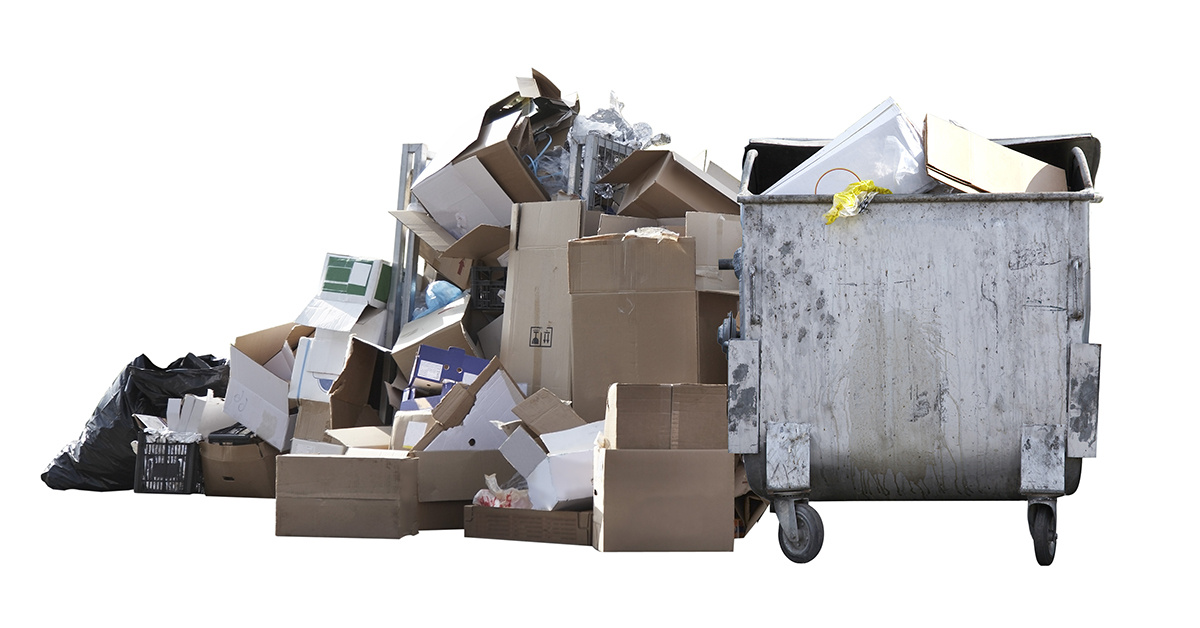
How Technology is Shaping the Future of Waste Management
By KenBay on Aug 22, 2022 3:15:47 PM
What Is the Internet of Things (IoT)?
The Internet of Things (IoT) describes the network of physical objects that are embedded with sensors, software, and other technologies for the purpose of connecting and exchanging data with other devices and systems.
Interconnected via the internet, these devices range from fairly ordinary household objects to super sophisticated industrial tools found in large cities throughout the globe. These account for more than 7 billion connected IoT devices today, with some experts expecting this number to grow to 22 billion by 2025.
IoT has become one of the most important technologies for 21st-century urban planning. Since we are now able to connect everyday objects—kitchen appliances, thermostats, baby monitors—to the internet via embedded devices, it stands to reason that city planners would also take advantage of seamless communication to improve waste management on a large scale.
Internet of Things Improving Smart City Life
The Internet of Things has become a necessary component in regards to the creation of more efficient, sustainable, livable, and resilient cities. Its growing impact illustrates the growing influence this will have on both people and planetary life for generations to come.
Since 1950, the number of people living in cities has risen from almost 751 million to over 4 billion in the second decade of the Twenty-First Century— in other words, more than half of the planet’s population.
Over the next three decades, projections are that cities will add yet another 2.5 billion more people. To keep up with the influx of humanity into smaller and denser areas, cities around the globe are expected to spend around $50 trillion on IoT technologies in the next 20 years.
This perpetual migration to urban areas puts greater pressure on public services such as the collection and disposal of waste. As a result, cities are implementing solutions driven by technology and data to reduce the added strain created by this growth.
Smart Technology in Waste Management

Although waste management collection is traditionally a low-level, labor-intensive service, IoT companies are developing multiple two-way communication tools to efficiently reduce labor and increase the productivity of waste management systems. Relevant products such as sensor-enabled trash receptacles measure waste levels in public bins and compact trash to reduce overflow. The bins share the data with local authorities, allowing them to enhance efficiency by planning collection routes where and when pickup is needed. Not only does this help improve the visual aspects of streets, but it is also pertinent in regards to pest control.
Garbage Pick-Up Goes Electric
Electric garbage truck vehicle use is steadily rising due to increased demand by city planners. The resulting trucks are efficient, quiet, and deliver many benefits by receiving power from battery packs as opposed to diesel-powered vehicles, which spew noxious fumes. Replacing traditional garbage trucks with electric ones would reduce fuel consumption by 67 percent and vehicle maintenance costs by roughly $25,000 each year.
RFID Tags in Garbage Collection

Radio Frequency Identification (RFID) tags are a type of tracking system which uses smart barcodes in order to identify items. These radio waves transmit data from the tag to a reader, which then transmits the information to an RFID computer program.
RFID tags are frequently used for merchandise, but they can also be used to track vehicles. In order to reduce waste, RFID tags have been introduced in numerous urban environments to provide city residents with a pay-as-you-throw garbage collection fee.
Advancing the waste management industry by infusing modern technology with IoT technology such as RFID tags into the transportation and storage of refuse reduces costs and contributes to creating more sustainable urban environments.
KenBay RotoPac IoT Technology for Waste System Integrators
Over the past 15 years, the Kenbay RotoPac has been used extensively to compact waste from various trim and pneumatic systems. Today’s smart RotoPac is even easier to use by systems integrators and OEMs with the new HMI interface.
PLC provides relays that allow the RotoPac to automatically synch up with other types of machinery such as conveyors, blowers, trim removal systems, vacuums, and associated pneumatic equipment.
OEM & Systems Integrators can take advantage of the flexibility of the KenBay RotoPac industrial waste disposal unit to extend the capabilities of other waste-related machines and reduce the cost of waste removal from cities that rely on smart city technology.
Easy interconnectivity between intelligence devices such as photo eye triggers and HMI viewscreens proves invaluable in reducing power consumption and man-hours. This is why more and more waste planners are turning to the KenBay Industrial Waste Compactor.

- Blog (11)
- Commercial Trash Compactor (11)
- waste reduction (7)
- Hazardous Waste (6)
- plastic recycling (5)
- sustainability (5)
- waste cost reduction (5)
- waste efficiency (5)
- Industrial Compactors (4)
- Industrial Waste Bags (4)
- industrial trash compactor (4)
- industrial waste (4)
- waste volume reduction (4)
- Industrial Waste Removal (3)
- Industrial trash compactors (3)
- cardboard baler (3)
- cardboard recycling (3)
- commercial compactor (3)
- hazardous waste safety (3)
- industrial waste compactor (3)
- industrial waste disposal (3)
- industrial waste safety (3)
- landfill diversion (3)
- recycling cost reduction (3)
- waste handling efficiency (3)
- waste transport efficiency (3)
- Recycling Regulations (2)
- RotoPac Waste Compactors (2)
- Smart Waste Solutions (2)
- Stainless Steel Compactors (2)
- Sustentability (2)
- case study (2)
- compactor benefits (2)
- hazardous waste disposal (2)
- health and safety (2)
- landfill gas recovery (2)
- lean manufacturing (2)
- paint disposal safety (2)
- recycling equipment (2)
- trim disposal solutions (2)
- waste compactors (2)
- waste management savings (2)
- zero landfill (2)
- zero waste strategy (2)
- Balers (1)
- Environmental Compliance (1)
- Equipment Comparison (1)
- Food Industry (1)
- Guide for Industrial Waste Management (1)
- Hazardous Waste Management (1)
- Increased property value (1)
- Industrial Compactor Safety (1)
- KenBay compactor (1)
- KenBay's RotoPac compactor (1)
- Pharmaceutical Waste (1)
- RotoPac Upgrades (1)
- Safety (1)
- Trash Compactor ROI (1)
- Waste Disposal (1)
- Waste Management Innovation (1)
- Waste Management Laws (1)
- Waste Management Planning (1)
- Waste Management Solutions (1)
- Waste Regulations (1)
- air quality safety (1)
- baking waste reduction (1)
- baler benefits (1)
- baler efficiency (1)
- baler safety (1)
- baler vs compactor (1)
- biofuels (1)
- biomass energy (1)
- bulk bag disposal (1)
- bulk bag handling (1)
- business efficiency (1)
- cardboard compactor safety (1)
- chemical disposal (1)
- chemical waste compliance (1)
- cling wrap (1)
- commercial real estate property (1)
- community service (1)
- compact equipment benefits (1)
- compaction features (1)
- compaction rate (1)
- compactor (1)
- compactor bags (1)
- compactor maintenance (1)
- compactor rental (1)
- compactor vs baler (1)
- cost savings (1)
- crusher benefits (1)
- depackaging (1)
- depackaging equipment (1)
- dewatering (1)
- dewatering equipment (1)
- durable trash compactor (1)
- dust control (1)
- dust system alternatives (1)
- edge trim waste (1)
- environmental impact (1)
- environmental waste handling (1)
- equipment features (1)
- facility waste awareness (1)
- food industry waste (1)
- food manufacturing waste (1)
- food waste handling (1)
- food waste recycling (1)
- freight (1)
- garbage handling (1)
- green waste solutions (1)
- hazardous substance handling (1)
- hazardous waste tips (1)
- health and safety compliance (1)
- history of the trash compactor (1)
- how to reduce waste (1)
- industrial compactor upgrade (1)
- industrial efficiency (1)
- industrial food waste (1)
- industrial non-hazardous waste (1)
- industrial recycling logistics (1)
- industrial waste compactors (1)
- industrial waste cost (1)
- industrial waste solutions (1)
- intellectual property (1)
- label matrix trim (1)
- label presses (1)
- landfill (1)
- landfill free strategy (1)
- landfill gas (1)
- lean (1)
- manufacturing (1)
- manufacturing IP (1)
- manufacturing efficiency (1)
- manufacturing safety (1)
- manufacturing waste reduction (1)
- manufacturing workflow (1)
- material flow (1)
- multi-industry waste solutions (1)
- plastic compactor (1)
- recyclable materials (1)
- recyclable transport (1)
- recycling balers (1)
- recycling equipment safety (1)
- recycling strategy (1)
- reduce manual waste (1)
- reduce waste expenses (1)
- regulatory compliance (1)
- rental waste solutions (1)
- safe disposal practices (1)
- safe paint handling (1)
- safe waste handling (1)
- small compactor (1)
- small footprint compactor (1)
- super sacks (1)
- sustainable waste practices (1)
- trash disposal savings (1)
- trash removal costs (1)
- waste audit (1)
- waste can efficiency (1)
- waste compaction efficiency (1)
- waste cost analysis (1)
- waste crusher (1)
- waste equipment costs (1)
- waste equipment investment (1)
- waste moisture reduction (1)
- waste product value (1)
- waste saving strategies (1)
- waste-to-energy (1)
- workplace hazards (1)
- workplace safty (1)
- zero waste resources (1)
- June 2024 (1)
- May 2024 (1)
- April 2024 (1)
- March 2024 (1)
- February 2024 (1)
- January 2024 (1)
- December 2023 (1)
- November 2023 (1)
- October 2023 (1)
- September 2023 (1)
- August 2023 (1)
- June 2023 (1)
- May 2023 (1)
- March 2023 (1)
- February 2023 (1)
- January 2023 (1)
- December 2022 (1)
- November 2022 (1)
- October 2022 (1)
- September 2022 (1)
- August 2022 (1)
- July 2022 (1)
- June 2022 (1)
- May 2022 (1)
- April 2022 (2)
- March 2022 (1)
- February 2022 (1)
- January 2022 (1)
- December 2021 (1)
- November 2021 (1)
- October 2021 (1)
- September 2021 (1)
- August 2021 (1)
- July 2021 (1)
- June 2021 (1)
- March 2021 (1)
- July 2020 (1)
- June 2020 (1)
- May 2020 (1)
- June 2019 (1)
- May 2019 (1)
- April 2019 (1)
- March 2019 (2)
- February 2019 (1)
- January 2019 (1)
- December 2018 (1)
- July 2018 (1)
- May 2018 (1)
- January 2018 (1)
- October 2017 (1)
- September 2017 (1)
- June 2017 (6)
- May 2017 (4)
- April 2017 (4)
- March 2017 (4)
- February 2017 (4)
- January 2017 (4)
- December 2016 (4)
- November 2016 (4)
- October 2016 (4)
- September 2016 (3)
- August 2016 (5)
- July 2016 (3)
- June 2016 (5)
- May 2016 (4)
- April 2016 (4)
- March 2016 (6)
- February 2016 (1)
Subscribe by email
You May Also Like
These Related Stories

Is Your Waste Can Sabotaging Your Manufacturing Efficiency?

Improve Safety and Reduce Costs When you Reduce Waste Removal