By KenBay on Jul 25, 2022, 4:35:37 AM
What Size Compactor Do You Need for Your Trash?
Every manufacturing facility generating industrial waste has to consider the most cost-efficient size of waste compaction equipment necessary to meet their individualized needs. The investment in the industry trash compactor necessary to minimize cost in proper trash removal is pertinent when planning for any facility, large or small.
In general, some of the factors to consider in selecting the most cost-effective size of a proposed industrial compactor for one’s facility needs are:
1. The type and volume of the waste materials being produced
2. How the material will be collected and transported to the trash compactor
3. Means and cost of getting the waste material to the trash hauler’s equipment
4. Types of industrial trash compactors available in the marketplace
5. Type of environment in which the waste is being produced and to be compacted
6. Space for a trash compactor at the facility – either inside or outside
7. Safety considerations
How Much Space Do You Have?
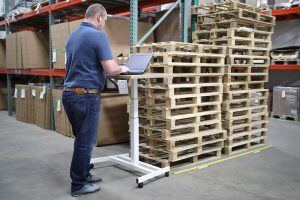 The volume of industrial trash being produced by a facility is easily obtainable from the invoices supplied by the trash hauling vendor each month. It is an important factor to consider in selecting compacting equipment because the compaction reduction volume for different types of compactors can determine overall cost-effectiveness.
The industrial waste being produced in various industrial facilities can vary from continuous strips of plastic/paper trim to multi-ply cardboard boxes, some of which may be hazardous. There are too many types of waste materials being produced to discuss in anything more than general terms in regards to trash. Plastics and paper make up the bulk of industrial manufacturing waste, but every facility that is job specific has unique concerns and floor space available for the trash compactor.
Reducing industrial waste disposal costs is all about reducing transporting waste costs. In other words, getting the waste from where it is produced to the compactor and then from the compaction equipment to the waste disposal area may be determined by the access the hauler has. So, the compaction ratio, i.e., times the volume of waste that can be reduced, is of paramount importance to reducing transportation costs.
What Type of Compactor Do You Need?
Industrial trash compactors fall into three types of categories: 1. stationary compactors used with a large container can for the compacted waste, 2. auger types that also use a container can, and 3. rotary type compactors that compact the waste into a bulk bag. Because of their large footprint, both the stationary and the auger with the container cans are always located outside of the facility. The footprint of a rotary compactor, such as the KenBay RotoPac, has a footprint slightly larger than a standard pallet. Therefore, the rotary compactors are most often located inside the facility, close to the source where the maximum amount of waste is produced.
Only the auger and the rotary compactors can continually compact waste, whereas the stationary compactor only compacts when the chamber is filled with waste and then closed. Continuous compacting is required for applications producing trim, such as with label-making equipment, or conveying discrete objects of waste into the compacting chamber. Another advantage the auger and rotary compactors provide versus the stationary is they produce 2 to 3 times greater compaction than a stationary compactor.
Benefits of a Rotary Compactor
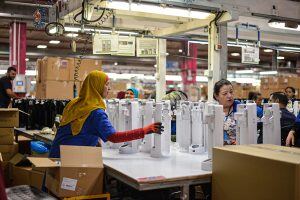 The rotary compactors provide greater safety without requiring any special platform or guides to guard the person putting waste into it. This is especially important because anyone in the facility can use that compactor without any training.
The most common environments in which industrial trash compactors are used are outdoors and on the facility floor where products are being produced. Two common exceptions are environments where foods or ingredients are being produced where stainless-steel compactors are required, or in dusty or gaseous areas like grain storage and paint shops. These require compactors with special components to prevent explosions.
Buying or Leasing an Industrial Trash Compactor
Almost all trash compactor vendors provide the option of either leasing or direct purchase. Which is best depends upon the financial situation of the buying company. That is strictly a financial decision and not that of the features and functions of the compaction equipment.
Call KenBay
If you need to learn more about trash compactor waste removal and which compaction machines are right for you and your facility, call the experts at KenBay. We can help with questions on cost savings, installation, selection, and other areas. Give us a call at 973-543-3200 or contact us online.

Your ROI: How Industrial Compactors Pay for Themselves
KenBay – Always Improving