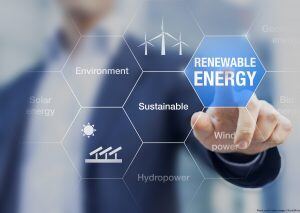
5 of the Best Ways Waste is Converted into Renewable Energy
By LaurenL on Sep 30, 2016 10:15:42 AM
Using renewable energy is a hot topic in the waste management industry, but it’s one that many people know less about than they think. Sure, we all recognize the most common renewable energy sources, like solar power and wind energy. But, there are many other types of renewable energy that aren’t quite as common knowledge. Did you know that sewage waste is now being used to heat and cool buildings? Or, that wasted food is used to generate electricity? Our waste has increasingly become a valuable way to replace non-renewable energy sources. Here are a few surprising examples:
1. Biomass
Biomass, organic materials like scrap lumber, forest debris, crops, and manure, can be used as fuel to create electricity or other forms of power. This type of waste, which generally comes from demolition, construction, or farming practices, can be burned to create heat. In biomass power plants, this heat is harnessed and used to heat industries and homes, or it is used to produce steam. The steam from burning biomass fuel is used to run turbines to make electricity.
2. Sewage
There is a near constant stream of warm sewage that comes from the biomatter, dishwashers, showers, and industrial processes that produce hot water and send it down the drain. Researchers in China have found ways to capture this heat and use it to regulate temperature inside buildings. In Philadelphia, this technology has been installed at the Southeast Wastewater Treatment Plant. Using only sewage and wastewater, a 20,000 square foot compressor building at the plant is fully heated and cooled by the system.
3. Landfill Gas
The life cycle of your garbage doesn’t end when it’s dumped at the landfill. Instead, once there, the decomposition of solid waste begins to produce a byproduct that can be used in surprising ways. Methane gas, a by-product of garbage decomposition, is collected at landfills and used as thermal energy, to generate electricity, or to do both at the same time. Landfill gas is also being used as an alternative to fossil fuels like natural gas.
4. Waste Heat
Major data centers, like IBM’s Zurich Research Laboratory, use water to cool down its servers. Once the water has done its job, these centers are left with hot water that is often treated as waste heat. Now, instead of disposing of this waste, it is being used to heat nearby homes. Much like hot sewage is used to warm buildings, other forms of waste heat, like that produced when cooling machinery, can be used to generate alternative heating and cooling systems.
5. Food Waste
Heartland Biogas Project in northern Colorado is just one example of an organization that is finding ways to use food waste to create energy. They, like many others, collect millions of gallons of food waste and combine it with anaerobic digesters. These digesters are bacteria that break down the waste. In the process, they give off methane. This methane is a powerful gas used to generate electricity and other forms of renewable energy.
How KenBay Can Help You Manage Your Waste
Whether or not your business produces waste that can be used as a renewable energy source, we know waste management can be a burden. Because trash compactors will reduce the weight and size of your waste, they are a great way to cut down your waste removal costs and improve the efficiency of waste management.
Trash compactors like KenBay’s RotoPac are ideal for industrial settings, and allow companies to reduce the volume of their trash at a ratio of six to one. The RotoPac can handle all kinds of waste from food to recyclables, and even solid hazardous waste.
Don’t let something like a waste get in the way of your business operations. If you’re interested in trash compactors or finding a committed consultant to help you reduce your waste, call KenBay. We can tell you more about our services, no matter what industry you’re in, or how much waste you are creating!
Photo credit: Getty Images / NicoElNino
- Blog (11)
- Commercial Trash Compactor (11)
- waste reduction (7)
- Hazardous Waste (6)
- plastic recycling (5)
- sustainability (5)
- waste cost reduction (5)
- waste efficiency (5)
- Industrial Compactors (4)
- Industrial Waste Bags (4)
- industrial trash compactor (4)
- industrial waste (4)
- waste volume reduction (4)
- Industrial Waste Removal (3)
- Industrial trash compactors (3)
- cardboard baler (3)
- cardboard recycling (3)
- commercial compactor (3)
- hazardous waste safety (3)
- industrial waste compactor (3)
- industrial waste disposal (3)
- industrial waste safety (3)
- landfill diversion (3)
- recycling cost reduction (3)
- waste handling efficiency (3)
- waste transport efficiency (3)
- Recycling Regulations (2)
- RotoPac Waste Compactors (2)
- Smart Waste Solutions (2)
- Stainless Steel Compactors (2)
- Sustentability (2)
- case study (2)
- compactor benefits (2)
- hazardous waste disposal (2)
- health and safety (2)
- landfill gas recovery (2)
- lean manufacturing (2)
- paint disposal safety (2)
- recycling equipment (2)
- trim disposal solutions (2)
- waste compactors (2)
- waste management savings (2)
- zero landfill (2)
- zero waste strategy (2)
- Balers (1)
- Environmental Compliance (1)
- Equipment Comparison (1)
- Food Industry (1)
- Guide for Industrial Waste Management (1)
- Hazardous Waste Management (1)
- Increased property value (1)
- Industrial Compactor Safety (1)
- KenBay compactor (1)
- KenBay's RotoPac compactor (1)
- Pharmaceutical Waste (1)
- RotoPac Upgrades (1)
- Safety (1)
- Trash Compactor ROI (1)
- Waste Disposal (1)
- Waste Management Innovation (1)
- Waste Management Laws (1)
- Waste Management Planning (1)
- Waste Management Solutions (1)
- Waste Regulations (1)
- air quality safety (1)
- baking waste reduction (1)
- baler benefits (1)
- baler efficiency (1)
- baler safety (1)
- baler vs compactor (1)
- biofuels (1)
- biomass energy (1)
- bulk bag disposal (1)
- bulk bag handling (1)
- business efficiency (1)
- cardboard compactor safety (1)
- chemical disposal (1)
- chemical waste compliance (1)
- cling wrap (1)
- commercial real estate property (1)
- community service (1)
- compact equipment benefits (1)
- compaction features (1)
- compaction rate (1)
- compactor (1)
- compactor bags (1)
- compactor maintenance (1)
- compactor rental (1)
- compactor vs baler (1)
- cost savings (1)
- crusher benefits (1)
- depackaging (1)
- depackaging equipment (1)
- dewatering (1)
- dewatering equipment (1)
- durable trash compactor (1)
- dust control (1)
- dust system alternatives (1)
- edge trim waste (1)
- environmental impact (1)
- environmental waste handling (1)
- equipment features (1)
- facility waste awareness (1)
- food industry waste (1)
- food manufacturing waste (1)
- food waste handling (1)
- food waste recycling (1)
- freight (1)
- garbage handling (1)
- green waste solutions (1)
- hazardous substance handling (1)
- hazardous waste tips (1)
- health and safety compliance (1)
- history of the trash compactor (1)
- how to reduce waste (1)
- industrial compactor upgrade (1)
- industrial efficiency (1)
- industrial food waste (1)
- industrial non-hazardous waste (1)
- industrial recycling logistics (1)
- industrial waste compactors (1)
- industrial waste cost (1)
- industrial waste solutions (1)
- intellectual property (1)
- label matrix trim (1)
- label presses (1)
- landfill (1)
- landfill free strategy (1)
- landfill gas (1)
- lean (1)
- manufacturing (1)
- manufacturing IP (1)
- manufacturing efficiency (1)
- manufacturing safety (1)
- manufacturing waste reduction (1)
- manufacturing workflow (1)
- material flow (1)
- multi-industry waste solutions (1)
- plastic compactor (1)
- recyclable materials (1)
- recyclable transport (1)
- recycling balers (1)
- recycling equipment safety (1)
- recycling strategy (1)
- reduce manual waste (1)
- reduce waste expenses (1)
- regulatory compliance (1)
- rental waste solutions (1)
- safe disposal practices (1)
- safe paint handling (1)
- safe waste handling (1)
- small compactor (1)
- small footprint compactor (1)
- super sacks (1)
- sustainable waste practices (1)
- trash disposal savings (1)
- trash removal costs (1)
- waste audit (1)
- waste can efficiency (1)
- waste compaction efficiency (1)
- waste cost analysis (1)
- waste crusher (1)
- waste equipment costs (1)
- waste equipment investment (1)
- waste moisture reduction (1)
- waste product value (1)
- waste saving strategies (1)
- waste-to-energy (1)
- workplace hazards (1)
- workplace safty (1)
- zero waste resources (1)
- June 2024 (1)
- May 2024 (1)
- April 2024 (1)
- March 2024 (1)
- February 2024 (1)
- January 2024 (1)
- December 2023 (1)
- November 2023 (1)
- October 2023 (1)
- September 2023 (1)
- August 2023 (1)
- June 2023 (1)
- May 2023 (1)
- March 2023 (1)
- February 2023 (1)
- January 2023 (1)
- December 2022 (1)
- November 2022 (1)
- October 2022 (1)
- September 2022 (1)
- August 2022 (1)
- July 2022 (1)
- June 2022 (1)
- May 2022 (1)
- April 2022 (2)
- March 2022 (1)
- February 2022 (1)
- January 2022 (1)
- December 2021 (1)
- November 2021 (1)
- October 2021 (1)
- September 2021 (1)
- August 2021 (1)
- July 2021 (1)
- June 2021 (1)
- March 2021 (1)
- July 2020 (1)
- June 2020 (1)
- May 2020 (1)
- June 2019 (1)
- May 2019 (1)
- April 2019 (1)
- March 2019 (2)
- February 2019 (1)
- January 2019 (1)
- December 2018 (1)
- July 2018 (1)
- May 2018 (1)
- January 2018 (1)
- October 2017 (1)
- September 2017 (1)
- June 2017 (6)
- May 2017 (4)
- April 2017 (4)
- March 2017 (4)
- February 2017 (4)
- January 2017 (4)
- December 2016 (4)
- November 2016 (4)
- October 2016 (4)
- September 2016 (3)
- August 2016 (5)
- July 2016 (3)
- June 2016 (5)
- May 2016 (4)
- April 2016 (4)
- March 2016 (6)
- February 2016 (1)
Subscribe by email
You May Also Like
These Related Stories

The Bright Future of Waste Management
What are the True Costs for Waste to Energy Transport