By KenBay on May 4, 2023, 11:54:13 AM
The excessive amounts of industrial non-hazardous waste is rapidly becoming an important issue for both developing and industrialized economic nations the world over. Countries are creating comprehensive waste management plans to help alleviate issues brought on by post-recycling, non-hazardous waste which would otherwise fester in landfills, causing ecological concerns.
The United States’ Environmental Protection Agency (EPA) has been tracking and reporting on garbage statistics in the United States for almost 35 years. The current rate of municipal solid waste (MSW) production is estimated by the government to be 292.4 million US short tons, or 4.9 pounds per person per day. Out of the MSW that was produced, about 69 million tons were recycled, and 25 million tons were composted.
The increased amount of waste deposited in landfills can be reduced by a number of initiatives, including Waste-to-Energy (WtE) projects and the increased recycling of renewable materials like paper and corrugated cardboard. The future of waste management includes sustainability and energy recovery trends which may include steam generation for industrial needs.
Generating Steam for Industrial Use
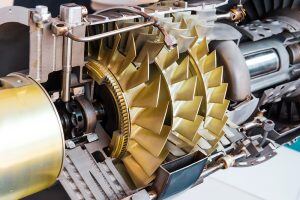
The most commonly used system for power generation from waste heat involves using waste to generate steam in an environmentally-sound industrial boiler designed specifically for municipal waste, which then drives a steam turbine. Steam turbines are one of the oldest and most versatile prime mover technologies. Heat recovery boiler and steam turbine systems operate thermodynamically. In this scenario, the working fluid (i.e., water) is first pumped to an elevated pressure before entering a heat recovery boiler. The pressurized water is vaporized by the hot exhaust and then expanded to lower temperature and pressure in a turbine, generating mechanical power that can drive an electric generator.
The EPA has delineated waste heat to power (WHP) processes which captures heat discarded by an existing thermal steam process and using that heat to generate power as an environmentally friendly alternative to such traditional energy sources as coal. Energy-intensive processes which give off excess amount of waste—such as those occurring at refineries, steel mills, glass furnaces, and cement kilns—all release hot methane exhaust gases and waste streams that can be harnessed with well-established technologies to generate electricity. The recovery of waste heat via steam for power is a largely untapped type of combined heat and power, which is the use of a single fuel source to generate both thermal energy and electricity.
Combined heat and power (CHP) generally consists of a prime mover, a generator, a heat recovery system, and electrical interconnection equipment configured into an integrated system. CHP is a form of distributed power generation that is located at or near the energy-consuming facility. By contrast, central station generation takes place at separate, centralized power plants. CHP’s inherent higher efficiency and its ability to avoid transmission losses in delivering electricity from the central station power plant to the user result in reduced primary energy use and lower greenhouse gas emissions. Although this proposed fuel source has a certain amount of inherent pollutants in its stream, proper filtering allows the waste to be re-used as an industrial benefit.
Recovering Energy from Waste
Generating energy in the form of electricity from the primary treatment of industrial or municipal waste, or the processing of waste into a stable fuel source is a process that allows energy to be recovered and reused from properly managed industrial waste. Most WTE processes either produce a combustible fuel commodity like methane, methanol, ethanol, or synthetic fuels, or they directly generate electricity and/or heat through combustion.
The most widespread and lucrative use of WTE is incineration or the combustion of organic material like trash with energy recovery. Incineration of industrial solid waste is a tested and true method of WTE generation. Incineration often involves burning garbage to boil water in order to power steam generators. This produces electricity and heat that can be used by households, companies, and other organizations. New solutions have emerged to address the issue of acid rain, which has been brought about by the recirculation of pollutants in the atmosphere.
Waste-to-Energy Vs. Coal

The conversion of municipal and industrial solid waste in Waste-to-Energy facilities has been recognized globally as a means to conserve fossil fuels and improve environmental quality by lessening the amount of waste to be landfilled. Throughout the world, over 120 million tons of municipal and industrial waste are combusted annually in WTE facilities that produce electricity and steam for heating. In the US alone, about 30 million tons of municipal and industrial waste are combusted in WTE plants to produce about 2.8 gigawatts of electricity and steam for heating. This constitutes approximately 0.3 % of total US electricity production.
However, one of the major concerns in combustion of municipal and industrial waste in WTE plants is the emission into the atmosphere of various types of gaseous emissions. The WTE emissions of concern are trace organic compounds, particularly polychlorinated dioxins and furans, volatile trace metals.
Coal-fired generating units on average produce more sulfur dioxide and nitrogen oxides than oil or gas-fired units in as coal generally contains more sulfur than other fossil fuels. Wet limestone scrubbers are the most commonly used control devices for large coal-fired plants and can be effective in reducing certain emissions.
And yet, the nationwide estimates obtained on the emissions of sulfur dioxide, hydrogen chloride, nitrogen oxides and trace metals such as cadmium, lead and mercury from coal-fired and WTE facilities showed that, per unit of thermal energy input and also per unit of power generated, the emissions of sulfur dioxide, particulate matter and nitrogen oxides were lower in WTE facilities than for coal-fired power plants.
Trust the KenBay Compactor Difference
KenBay adds enormous value to your company’s implementation of the EPA Guide for Industrial Waste Management. A critical player in the future of waste management, the KenBay Rotopac Rotary Compactor reduces the amount of your company’s industrial waste by tightly compacting it into 4’ cubed bags, which enables haulers to maximize the space needed to truck it to recycling centers, Waste To Energy (WtE) facilities. These stackable bags are superior to transporting roll-offs and receiver cans which contain considerable air. This allows facility managers to make environmentally responsible decisions while working in partnership with local regulatory agencies and the public at large to reduce the size of their industrial waste footprint and drastically reduce the expense of transporting waste to recycling centers and WtE facilities for power generation.
Reasons to Try the KenBay RotoPac Industrial Compactor:
- The small 4’ x 5’ footprint allows for strategic placement, which means less handling.
- The high compaction rate of 6:1 means you can ship more waste, not air.
- When you minimize the handling of waste materials, you also improve safety compliance.
- KenBay is the only U.S. supplier of rotary continuous compaction machines like the RotoPac.
- You can go biodegradable – with the RotoPac, biodegradable waste bags are available.
The Bright Future of Waste Management
What are the True Costs for Waste to Energy Transport